
How to be a Good Engineer in the Age of AI
“Dos” and “don’ts” for happier developers in the age of the clanker.
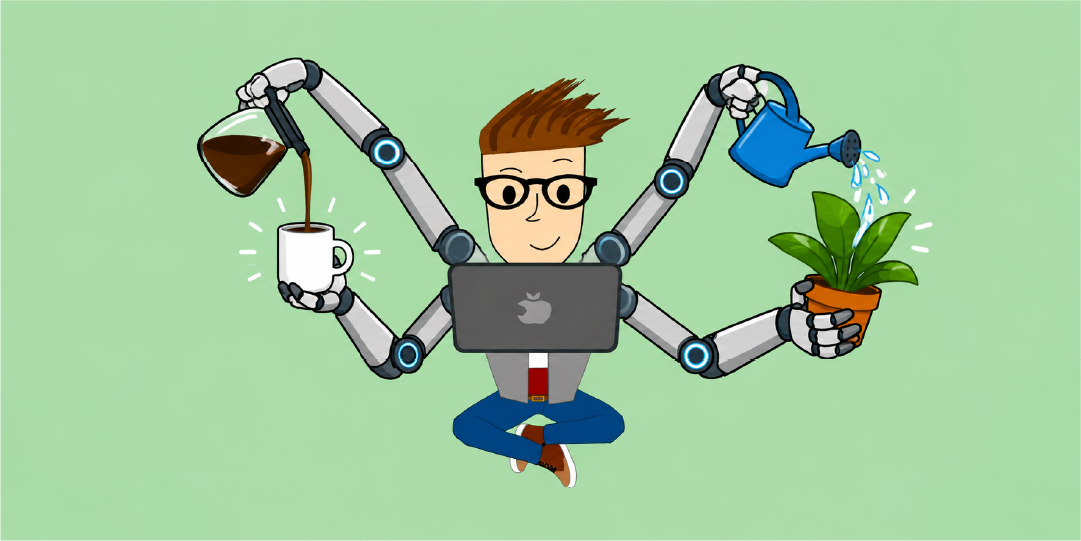
Like it or not, tools like Anthropic’s Claude Code and Open AI’s Codex are here to stay. In the way that mechanization changed agriculture, or the printing press gave birth to publishing, the software industry is going through a similar seismic shift (albeit at a much, much faster pace).
Much ink has been spilt by financial journalists regarding the viability of the major AI labs. Given the potential for token price wars and the rate at which these companies are burning cash, it’s anyone’s guess how much longer the bubble can keep inflating. Will our current tech overlords also be our future tech overlords? In a sense, it doesn’t matter. The LLM genie is out of the bottle, and it’s not going back in. The corporate logos may change over time, but the technology will endure.
For us developers, especially the younger ones, the implications on our careers are significant. So, in the spirit of “if you can’t beat them, join them”, here are a few “dos” and “don’ts” for happier engineers in the age of the clanker.
DO: Embrace the Tools …
San Francisco is an incredibly homogenous place: nearly everyone works in tech. If you throw your hat in the air on the corner of Mission & 2nd, it’s gonna hit someone who knows their microservices from their monoliths. During my time there, the tech workers I met split roughly into two camps: people who loved money more than computers, and people who loved computers more than money. In the years after the launch of ChatGPT, AI coding tools were embraced more readily by the former than the latter.
If you love to program for its own sake, you may look at the current wave of agentic programming as something to be sad about. You put in all those hours learning data structures, algorithms, syntax, and VIM motions just to be asked to offload your expertise to a robot. But it doesn’t have to be like that. When used properly, LLMs will enhance you, not replace you.
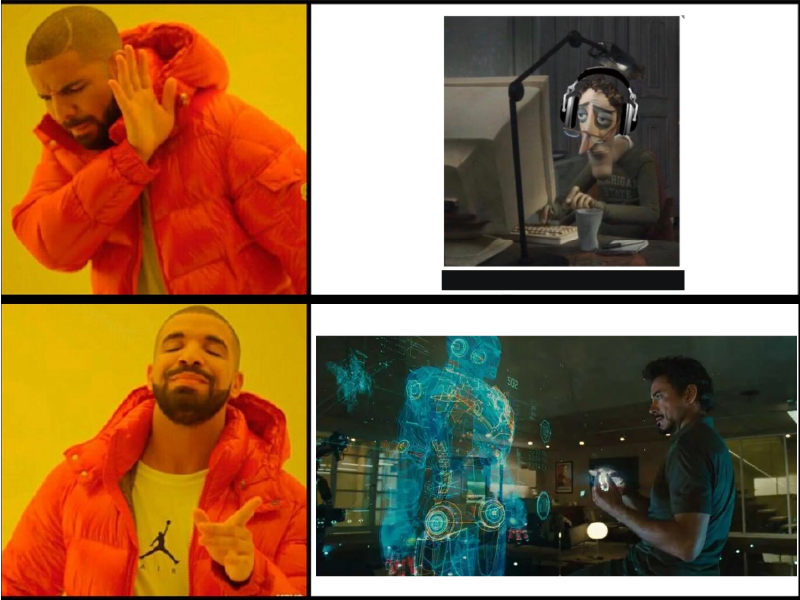
But let me be clear: you must understand these tools. Ignorance is not a career strategy. In 2026, agents are too good to ignore, and refusing to engage with them is a bit like refusing to use a compiler.
… but Understand their Limits
LLMs are next-token-predictors. They are not magic, they don’t know everything, and they can’t read your mind.
The models have a tendency to over-explain, even when they’re wrong. Anthropic has acknowledged that Claude can be quite verbose, producing much more code than is necessary to solve a simple problem. I recently reviewed a 12-line function that Claude produced where 8 of those lines were just comments.
Don’t blindly trust their output. The model could propose a solution where all the code compiles, but that doesn’t make it the best course of action for the system as a whole. In my own work, we recently discovered a client polling one of our services every 5 seconds for the same data. Claude suggested we cache the data at the server, but it never questioned if the polling behavior was necessary in the first place. We ignored its suggestion and updated the client cache TTL.
Some of the BEST uses of AI are:
- Finding critical bugs
- Writing tests
- Creating prototypes
- Updating configuration files
- Researching difficult problems
- Small production features under 200 lines of code
Some of the WORST uses of AI are:
- Writing documentation – if you want humans to read it, don’t use a robot to write it.
- Large production features – after about 200 lines of code, your ability to fully understand the change declines dramatically
- Ticket creation and backlog grooming – do you really want an AI model to decide what’s important for you?
DO: Code By Hand, Review By Hand (at least sometimes)
Your ability to maintain a system is predicated upon your ability to understand it. This understanding, or “wisdom”, for lack of a better word, is not built by shipping features at five times the speed you were in 2019. It comes from the slow, steady buildup of knowledge grounded in intentional, incremental change.
We used to get this wisdom for free. It was a side effect of having to think about every code change. In the halcyon days before LLMs, a pull request was the by-product of deep research into a problem. Maybe you only changed a single line of code, but finding that line took many hours of reading documentation, talking to colleagues, and running experiments on the system. That process built up your knowledge of how things work, and knowing how things work is what makes you valuable as an engineer.
Use AI tools to expedite the research process. Find that one-line-change in 10 minutes instead of 2 hours, without sacrificing the knowledge gain. Once found, make the change by hand. Much how the physical act of writing something down improves your chances of remembering it, making the code change yourself will sharpen your skills and increase your confidence.
DO: Spend Your Tokens Efficiently
Earlier this year, Uber reported that the company blew through its annual AI budget in just 4 months. In an effort to climb the internal AI leaderboard, some Amazon engineers were forcing the models to do useless things.
Don’t be that guy. Tokens are expensive. They could become more expensive as the pressure builds for AI labs to produce a profit. Use them to do something valuable.
DON’T: Force Your Colleagues to Review Slop
The slop PRs are getting out of control. 10 pull requests opened in less than a minute, 2,000+ lines each, verbose descriptions, written by a bot, reviewed by a bot. If you’re doing this, just know that your coworkers hate it and they are plotting your untimely death.
If you don’t care enough to mop up your own Claude-vomit, neither will your teammates. It’s fine to vibe code, but at least look at the output with your own eyeballs before you ask someone else to approve it. And write your own PR descriptions. At the very least, it will force you to understand the changes made and why they were necessary.
DON’T: Be a “Meat Proxy”
I think Niklas Gruhn said it best, and I don’t have too much to add.
Don’t outsource your brain to Claude.
DON’T: Worry Too Much About the Future
It’s a brave new world out there, and we’re all experiencing it together. Social media is filled with hyperbolic posts claiming that you’ll be “left behind” if you don’t know tool X or Y. But the truth is that no one knows where we go from here.
In the meantime, just focus on producing high quality work and being a good teammate.